The Real Estate Alfil Chair at San Telmo Business School examines how branded residences drive luxury asset values up to 40%.
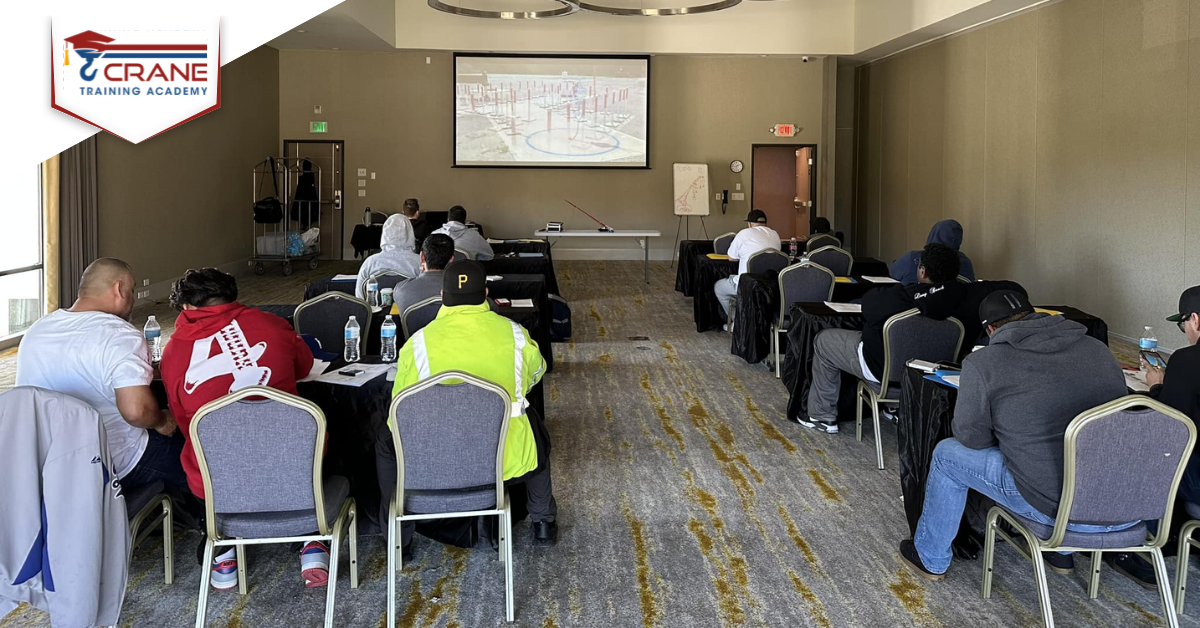
MáLAGA, MÁLAGA, SPAIN, February 27, 2026 /EINPresswire.com/ — The Real Estate Alfil Chair at San Telmo Business School held a new academic session focused on the luxury residential market and the phenomenon of branded residences, examining how branding has evolved from a purely aesthetic attribute into a strategic asset capable of sustaining positioning, pricing and reputation over time, increasing asset values by up to 40%.
The session brought together international firms such as Savills and Pininfarina, alongside leading local companies from the Golden Triangle, in a forum that combined global insight, financial analysis and operational expertise to understand luxury as a system rather than simply a product.
Structural transformation
The international overview was delivered by Louis Keighley and Sinéad Canning of Savills London (Global Residential Development), who contextualised the global growth of branded residences. Keighley explained that the market has evolved from a model largely concentrated in the United States towards clear expansion across Europe, the Middle East and Asia, stressing that “branded residences are not a passing trend; they represent a structural transformation of the high-end segment.” He emphasised that in high-value transactions, often conducted across different jurisdictions from that of the buyer, “the brand operates as a mechanism of trust. It does not sell square metres; it sells certainty.”
Canning, for her part, noted that the sector’s growth is largely driven by hotel brands, as buyers associate luxury hospitality with proven standards of service and maintenance. “The reputational component is decisive,” she stated, highlighting that the market forecasts sustained growth for this type of development in the coming years.
Both agreed that the Costa del Sol is now firmly part of the international luxury circuit and competes on qualitative indicators — quality of life, climate and residential ecosystem — with established traditional markets such as Miami and Dubai.
The buyer on the Costa del Sol
The global perspective was brought into focus at local level during a round table moderated by José Félix Pérez-Peña (Savills Spain), with the participation of Javier Nieto (CEO of Pure Living Properties) and Carlos Rodríguez (CEO of Sierra Blanca Estates Developments). The speakers agreed that high-level clients are not solely seeking construction quality — which is taken for granted — but rather three essential elements: security, service and peace of mind.
Nieto stated that “luxury in this segment means reducing friction, delegating with confidence and buying time”, also pointing out that the buyer profile has evolved towards a more long-term, wealth-oriented perspective: “We are increasingly seeing clients who not only come on holiday, but establish their primary or semi-permanent residence here.”
Rodríguez, meanwhile, underlined that the ultra-prime client is sophisticated and analytical: “Nothing is given away. These are buyers who fully understand value and demand consistency between price, product and experience.”
Financing in the luxury segment
The financial panel brought together Juan Jesús Serrano Gallardo, Head of Real Estate and Hotel Risk at Banco Sabadell; José González Cañabate, Investment Director of the Cosentino Group Family Office; and David Ventoso, CEO of Autonomy Capital and Chairman of the Board of Hotel Finca Cortesín. Serrano explained that risk analysis in the prime segment cannot be limited to financial ratios: “We must incorporate the quality of the developer, the coherence of the positioning and the overall solidity of the project.”
Cañabate, for his part, defended discipline in capital allocation and the importance of safeguarding reputation and alignment of interests: “In this type of asset, the integrity of the project is as relevant as profitability.”
Ventoso contributed the perspective of international capital, highlighting that in high-end transactions non-financial variables such as the quality of the operator and strategic coherence play a decisive role. “The physical experience and the uniqueness of the asset are elements that capital particularly values,” he noted.
The panel reached a clear conclusion: financing in the luxury segment is not more flexible; it is more demanding. And brand credibility reduces risk and facilitates structuring.
The brand as a long-term asset concept
The intervention of Javier Reviriego, Managing Director of Valderrama, advisor to the Four Seasons Marbella project and former Managing Director of Finca Cortesín, offered a profound reflection on how value is built over time. The keynote conversation was moderated by Francisco de Asís Gómez, Managing Director of Alfil Patrimonial Socimi, S.A.
Reviriego structured his reflection around four concepts: positioning, coherence, discipline and ecosystem. “Brand value is created consistently, based on the real experience of the client,” he stated, adding that “a brand is, in essence, what others say we are.”
He argued that in adverse cycles, maintaining standards and preserving positioning protects the asset’s reputation: “Discipline is the ability not to deviate from the original plan.” Regarding branded residences, he insisted that the brand cannot be understood as a cosmetic element.
Pininfarina: integrated design and value premium
The session concluded with the intervention of Giovanni de Niederhäusern, Senior Vice President of Architecture & Product Design at Pininfarina, accompanied by Luis María Marín Gálvez, Pininfarina Ambassador for Spain, in a discussion moderated by Sofía Polo, CEO of Grupo Polo.
Giovanni explained how industrial design methodology can be applied to real estate, advocating the integration of beauty, technology and process under the equation “Beauty + Tech = Impact”. He compared the automotive industry — highly industrialised — with the construction sector, which still suffers from fragmentation and lower efficiency, and called for more coordinated and integrated processes.
In the field of branding, he pointed out that the brand directly influences the ability to generate a value premium, noting that in certain markets branded residences can achieve price increases of up to 40% compared to comparable assets.
New incorporations and business vision
The session also included the incorporation of the law firm EJASO and the real estate company Vista Hermosa Villas, based in El Puerto de Santa María, into the Advisory Board of the Chair. In addition, Antonio Bazán, CEO of developer BZH; Rubén Solís, CEO of construction company B. Solís; and Javier Nieto, CEO of the agency Pure Living Properties, had the opportunity to share with attendees the experience and market knowledge accumulated
Carmen Durán
+34 609 56 98 78
email us here
Carmen Durán Comunicación
Visit us on social media:
LinkedIn
Legal Disclaimer:
EIN Presswire provides this news content “as is” without warranty of any kind. We do not accept any responsibility or liability
for the accuracy, content, images, videos, licenses, completeness, legality, or reliability of the information contained in this
article. If you have any complaints or copyright issues related to this article, kindly contact the author above.